Home /
NEWS /
Welded Wire Farm Fence vs Woven Wire Farm Fence: Key Differences and Applications
Sep 23, 2026
Farm fencing is available in many different designs, but two common options are welded wire farm fence and woven wire farm fence.
At first glance, both products may look similar because they are manufactured from horizontal and vertical steel wires. However, their wire connections, flexibility, installation characteristics and typical applications are different.
Welded wire farm fence is made by welding the wires together at their intersections, creating a relatively rigid mesh. Woven wire farm fence is manufactured by mechanically weaving or knotting the wires together, allowing the fence to flex when subjected to pressure or uneven terrain.
For farmers, ranch operators, agricultural contractors and fencing distributors, understanding these differences is important when selecting fencing for livestock, pasture boundaries, gardens and agricultural properties.
 What Is Welded Wire Farm Fence?
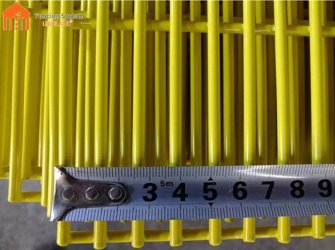
Welded wire farm fence is manufactured by arranging horizontal and vertical steel wires and welding them together at their intersections.
The result is a grid-like mesh with fixed openings.
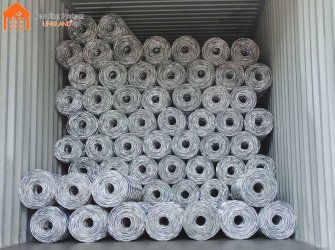
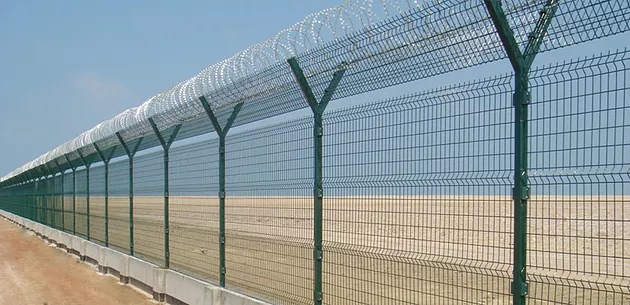
Depending on the design, welded farm fence can be supplied in rolls or rigid panels.
Common features include:
Welded intersections
Relatively rigid structure
Uniform mesh openings
Multiple wire diameters
Galvanized or PVC-coated options
Roll or panel formats
Various fence heights
Welded wire farm fence is often considered for gardens, poultry areas, small animal enclosures, farm boundaries and other applications where a stable mesh structure is useful.
What Is Woven Wire Farm Fence?
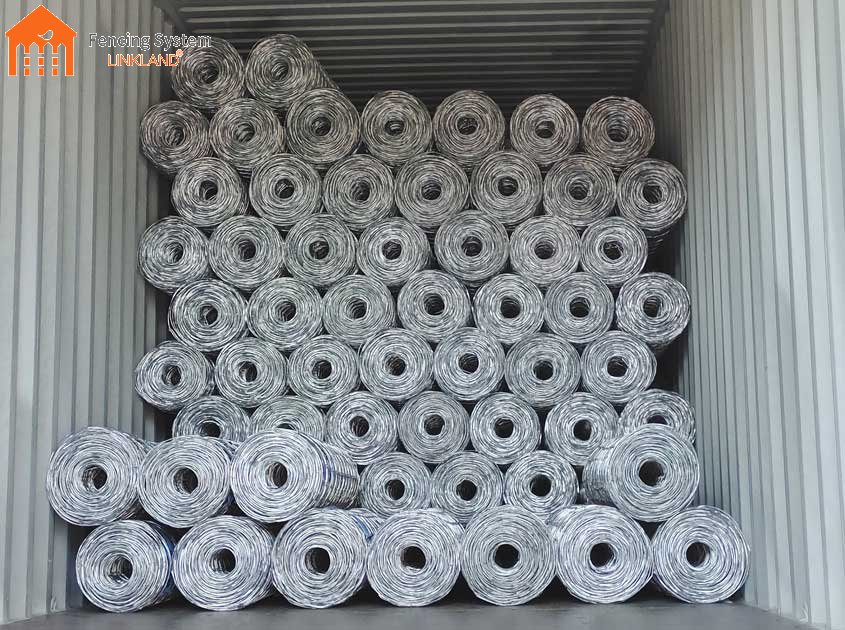
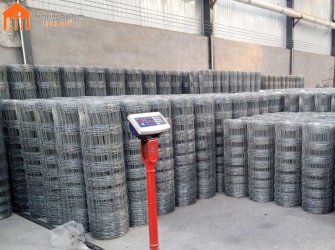
Woven wire farm fence is manufactured by mechanically weaving, twisting or knotting horizontal and vertical wires together.
Instead of being welded at every intersection, the wires are mechanically connected.
This gives woven fencing greater flexibility compared with many welded wire products.
Woven farm fence includes several different designs, such as:
Field fence
Fixed-knot fence
Livestock fence
Cattle fence
Horse fence
Deer fence
The exact construction varies according to the intended animal and application.
Welded vs Woven Farm Fence: Main Differences
The most important differences can be summarized as follows:
Feature Welded Wire Farm Fence Woven Wire Farm Fence
Wire connection Welded Woven, twisted or knotted
Structure Relatively rigid More flexible
Mesh opening Usually uniform Can vary within the same fence
Installation on uneven terrain More difficult in some cases Generally more adaptable
Livestock applications Selected applications Widely used
Small animal enclosures Common Also available
Pasture fencing Possible Very common
Roll format Common Very common
Panel format Common Less common
Custom mesh patterns Easy to specify Many livestock-specific designs
The right choice depends on the application rather than one product being universally better.
1. Wire Connection
The biggest structural difference is how the wires are joined.
Welded Wire Fence
The horizontal and vertical wires are welded together.
This creates fixed intersections and helps maintain a consistent mesh shape.
If a 100 × 100 mm mesh is specified, the openings generally remain consistent throughout the fence.
This can be useful when uniform openings are important.
Woven Wire Fence
The wires are mechanically woven or knotted together.
This allows the wires to move slightly relative to one another.
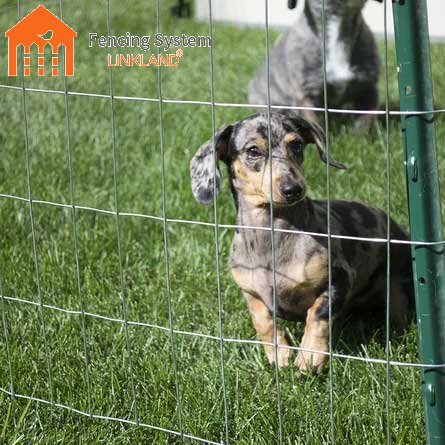
As a result, woven fencing can absorb some movement and follow changes in the terrain more easily.
 2. Flexibility
Woven wire farm fence generally has greater flexibility than welded wire fencing.
This can be useful when installing fencing over:
Sloping ground
Uneven terrain
Curved fence lines
Pasture boundaries
Irregular agricultural land
Welded wire fence maintains a more rigid mesh structure.
This can be an advantage when the fence needs to remain straight and retain a fixed opening pattern.
For flat, regularly shaped areas, either system may be practical.
3. Mesh Opening
Mesh opening is an important difference between the two designs.
Welded wire fence commonly uses a regular rectangular or square opening.
For example:
50 × 50 mm
or
100 × 100 mm
Woven livestock fence can use different horizontal wire spacing at different heights.
For example, the lower section may have smaller openings while the upper section has larger openings.
This graduated design is particularly useful for livestock fencing because the fence can provide different levels of containment within one roll.
4. Which Fence Is Better for Cattle?
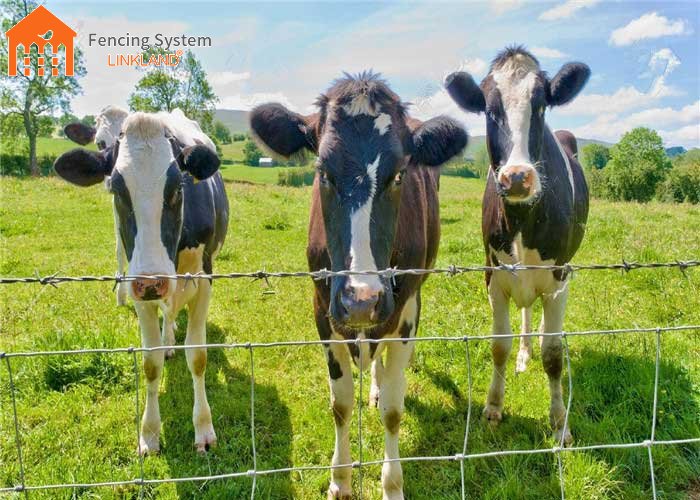
For large cattle pasture areas, woven wire farm fence is commonly considered because it can provide a flexible livestock barrier over long distances.
Potential advantages include:
Large roll lengths
Flexible installation
Livestock-specific designs
Different wire spacing
Suitable for uneven terrain
Multiple height options
Welded wire can also be used for cattle-related applications, but the mesh design and wire diameter must be selected carefully.
A lightweight welded garden mesh should not be treated as equivalent to a purpose-designed cattle fence.
For cattle, the complete fence system should be evaluated, including wire diameter, height, mesh opening, posts and gates.
5. Which Fence Is Better for Horses?
Horse fencing requires particular attention to safety.
A horse fence should provide reliable containment while reducing the risk of a horse becoming caught in the fence.
Woven wire horse fence can be designed with openings intended specifically for horses.
Visibility is also important.
Welded wire fence can be suitable for certain horse enclosures when the mesh opening and wire configuration are appropriate.
However, a rigid mesh with openings that are too large or too small may not be suitable.
The correct choice depends on:
Horse size
Fence height
Mesh opening
Wire diameter
Visibility
Supporting structure
Gate design
 6. Which Is Better for Sheep and Goats?
Woven wire fencing is widely used for sheep and goats because it can be manufactured with relatively small openings in the lower part of the fence.
This can help prevent smaller livestock from passing through the fence.
For goats, the fence also needs to account for climbing and pushing behavior.
Welded wire can work well for smaller enclosures, but the mesh opening should be selected carefully.
A rigid welded mesh may be especially useful for:
Small animal pens
Goat enclosures
Poultry areas
Garden livestock areas
For large pasture boundaries, woven livestock fence is often easier to adapt to long fence lines.
7. Installation on Uneven Ground
Farm properties are rarely perfectly flat.
Woven wire fencing has an advantage in many uneven-ground applications because the wire structure can flex and follow gradual changes in terrain.
This makes it useful for:
Hills
Pastures
Ranch boundaries
Irregular fields
Long agricultural fence lines
Welded wire fencing is more rigid.
When installed on uneven ground, the installer may need to make additional adjustments to prevent excessive gaps or distortion.
However, welded mesh can be an excellent option for relatively flat areas where maintaining a straight fence line is important.
8. Fence Strength
It is difficult to say that welded wire is always stronger than woven wire or vice versa.
The overall performance depends on the complete specification.
Important factors include:
Wire diameter
Steel grade
Fence height
Mesh opening
Connection design
Zinc coating
Post spacing
Installation quality
A heavy-gauge woven fence can be stronger and more suitable for livestock than a lightweight welded mesh.
Similarly, a heavy welded fence can provide substantial rigidity.
Therefore, do not compare products simply by saying:
Welded is stronger.
or:
Woven is stronger.
Compare the actual specifications instead.
9. Welded Wire Fence: Main Advantages
Welded wire farm fence has several useful characteristics.
Uniform Mesh
The welded structure provides consistent openings.
Rigid Construction
The fence tends to maintain its shape during handling and installation.
Clean Appearance
The regular grid pattern can create a neat appearance around gardens, farms and animal enclosures.
Easy Specification
Buyers can specify:
Wire diameter
Width
Height
Length
Mesh opening
Multiple Formats
Depending on the product, welded mesh can be supplied as:
Rolls
Panels
Fence sections
This flexibility makes welded wire useful for both agricultural and general fencing applications.
10. Woven Wire Fence: Main Advantages
Woven farm fence has different strengths.
Flexible Structure
The woven construction can adapt to terrain and movement.
Livestock-Specific Designs
Manufacturers can produce different wire spacing patterns for:
Cattle
Horses
Sheep
Goats
Deer
Mixed livestock
Long Roll Lengths
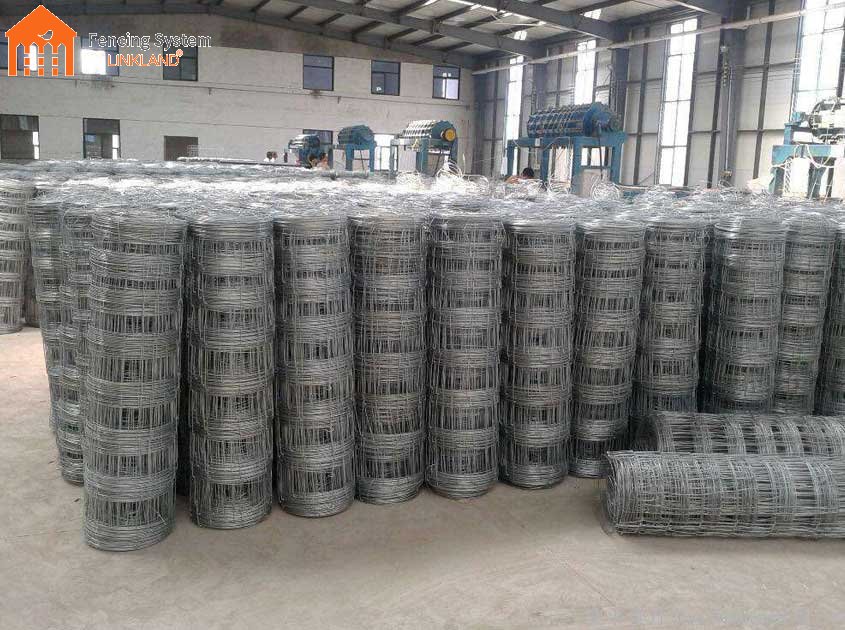
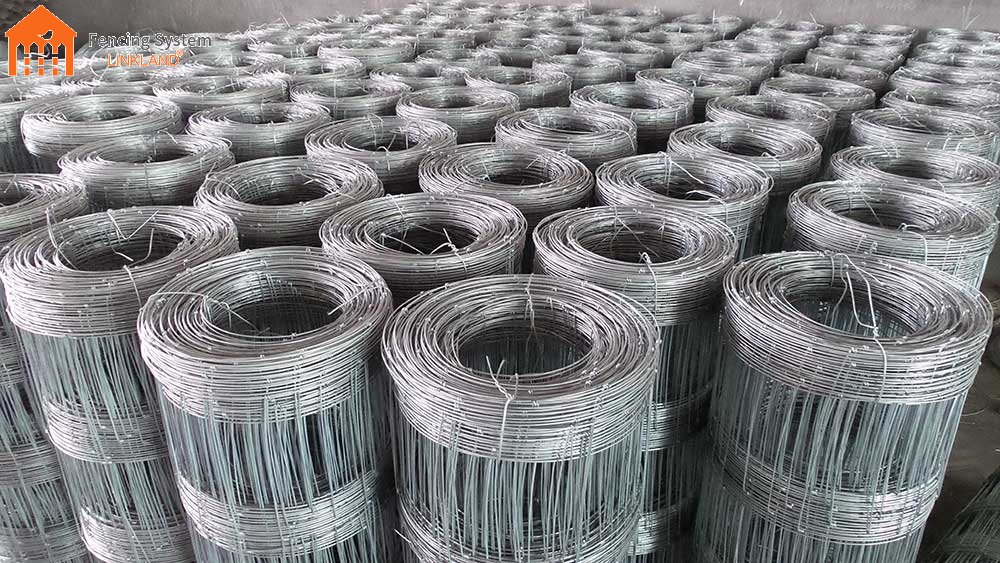
Woven fence is commonly produced in long rolls, which can be useful for large pasture areas.
Variable Mesh Openings
Some designs use smaller openings near the ground and larger openings toward the top.
Suitable for Uneven Terrain
The flexible structure can make installation easier on sloping agricultural land.
 11. Galvanized Coating
Both welded and woven farm fences can be galvanized.
Galvanization helps protect steel wire from corrosion during outdoor exposure.
Possible configurations include:
Galvanized before welding
Galvanized after welding
Galvanized before weaving
Galvanized after weaving
The actual zinc coating specification is important.
When comparing two suppliers, ask for:
Zinc coating mass
Galvanizing method
Wire diameter
Applicable standard
Simply asking for “galvanized farm fence” does not guarantee that two suppliers are offering equivalent products.
12. PVC-Coated Farm Fence
Both welded and woven wire fences can also be PVC coated.
PVC coating adds a colored polymer layer to the steel wire.
Common colors include:
Green
Black
Dark green
PVC-coated farm fence may be considered when appearance is important or when an additional surface barrier is desired.
However, the PVC coating should not be considered a replacement for specifying the steel core.
For quotations, clearly identify:
Steel core diameter + finished coated diameter + PVC coating specification
where applicable.
13. Cost Comparison
The cost difference between welded and woven farm fence depends heavily on the specification.
Factors include:
Wire diameter
Mesh opening
Fence height
Roll length
Steel price
Galvanizing
PVC coating
Manufacturing process
Packaging
Order quantity
A lightweight welded mesh may be less expensive than a heavy livestock-grade woven fence.
But a heavy welded fence may cost more than a lighter woven design.
Therefore, price comparisons should be based on equivalent:
coverage area + wire specification + coating + application
rather than price per roll alone.
14. Which Fence Is Easier to Install?
Installation depends on the site.
Welded Wire
Welded mesh can be relatively easy to install on flat, prepared ground.
The rigid structure can make it convenient for keeping the fence straight.
Panels can also simplify installation where rigid sections are preferred.
Woven Wire
Woven fencing can be easier to adapt to uneven ground.
Long rolls can cover large distances efficiently.
However, correct tensioning is important for many woven livestock fence designs.
Corner and end posts need to be properly constructed because they carry significant tension.
15. Which Fence Is Better for Large Pastures?
For large cattle, horse or mixed-livestock pastures, woven wire fencing is often a practical option because it is available in long rolls and livestock-specific configurations.
It can provide:
Long-distance coverage
Flexible installation
Multiple height options
Different wire spacing
Adaptation to uneven terrain
Welded wire may be more suitable for smaller agricultural areas, animal pens, garden boundaries or applications requiring rigid mesh.
The size of the project should therefore be considered alongside the animal type.
16. Which Fence Is Better for Gardens and Small Farms?
For gardens, small farms and poultry areas, welded wire can be convenient because of its regular mesh pattern and rigid structure.
Potential applications include:
Vegetable gardens
Chicken runs
Small animal cages
Garden boundaries
Storage areas
Small livestock pens
Woven mesh can also be used, particularly where flexibility or long roll lengths are important.
17. A Simple Selection Guide
Consider Welded Wire Farm Fence When:
You need uniform mesh openings.
A relatively rigid structure is preferred.
The ground is relatively flat.
The fence is for gardens or small animal areas.
You want rolls or rigid panels.
A clean, regular mesh appearance is important.
Consider Woven Wire Farm Fence When:
The fence will cover a large pasture.
Livestock containment is the primary purpose.
The ground is uneven.
Flexible installation is useful.
Different wire spacing is required.
The fence needs to follow agricultural terrain.
These are general guidelines. The final specification should always be based on the animals and site conditions.
18. What Should You Tell a Manufacturer?
When requesting a quotation, provide as much of the following information as possible:
Fence Type: Welded / Woven
Animal: Cattle / Horses / Sheep / Goats / Mixed
Fence Height: ___ m
Mesh Opening: ___ mm
Wire Diameter: ___ mm
Surface: Galvanized / PVC-coated
Roll Length: ___ m
Quantity: ___ rolls
Application: Pasture / Perimeter / Animal enclosure
Country: ___
For woven livestock fence, also specify the desired wire configuration or provide a reference drawing.
This prevents suppliers from quoting different products under the same general name.
 Common Buying Mistakes
Mistake 1: Comparing only mesh opening
Two fences with the same opening can have very different wire diameters and structural performance.
Mistake 2: Assuming welded means stronger
The connection type is only one factor.
Wire diameter, steel properties, fence configuration and installation are equally important.
Mistake 3: Using garden mesh for livestock
Lightweight welded garden mesh may not be suitable for cattle or horses.
Mistake 4: Ignoring terrain
A rigid fence that works well on flat land may require more installation work on steep or irregular ground.
Mistake 5: Forgetting the supporting posts
Fence performance depends on the entire system.
Posts, corners, gates and tensioning components must be selected together with the mesh.
Mistake 6: Comparing prices from different specifications
Always compare the same fence height, wire diameter, mesh configuration, coating and roll length.
FAQ
Is welded wire fence better than woven wire fence?
Neither is universally better. Welded wire provides a relatively rigid and uniform mesh structure, while woven wire offers greater flexibility and is widely used for livestock and pasture fencing.
Is woven wire stronger than welded wire?
Not necessarily. Strength depends on wire diameter, steel specification, mesh configuration, connection design and installation.
What is better for cattle, welded or woven fence?
Woven livestock or field fence is commonly considered for large cattle pastures because of its flexible structure and livestock-specific configurations. Welded wire can also be suitable for certain cattle enclosures when the specification is appropriate.
What is better for horses?
The fence should be selected based on safety, visibility, opening size, height and containment. Horse-specific woven fencing, suitable welded mesh and visible rail systems can all be considered.
Can welded wire farm fence be used for uneven ground?
Yes, but its rigid structure may require more careful installation than flexible woven fencing. The terrain should be considered when choosing the fence system.
Can woven wire fence be galvanized?
Yes. Galvanized woven wire farm fence is widely used for outdoor agricultural applications.
Can farm fence be PVC coated?
Yes. Both welded and woven wire products can be produced with PVC-coated wire depending on the manufacturer's product range.
Final Thoughts
Welded wire farm fence and woven wire farm fence are both useful agricultural fencing products, but they are designed around different structural characteristics.
Welded wire fence provides fixed intersections, uniform openings and a relatively rigid structure. It can be useful for gardens, small animal enclosures, poultry areas and applications where a regular mesh pattern is preferred.
Woven wire farm fence provides a more flexible structure and can be manufactured with livestock-specific wire spacing. It is commonly considered for cattle, horses, sheep, goats and large pasture boundaries.
For buyers, the best approach is to start with the application rather than the product name.
Consider:
Animal → Terrain → Fence Height → Mesh Opening → Wire Diameter → Coating → Posts → Installation
Once these requirements are clear, it becomes much easier to choose between welded and woven farm fence and to obtain comparable quotations from manufacturers.
Pre:Why Choose Chain Link Fence? Key Advantages, Applications and Buying Guide
Next:High Tensile Farm Fence vs. Traditional Farm Fence: Which Is Right for Your Farm?

.png)
.png)
.png)
.png)


 Address