Home /
NEWS /
What Are the Common Packing Methods for Wire Mesh Export?
Dec 22, 2025
For international buyers sourcing
wire mesh products from China, packing is far more than a logistical detail. Proper packing plays a critical role in protecting products during long-distance transportation, ensuring smooth customs clearance, and reducing damage or losses upon arrival.
This article explains the most common packing methods for wire mesh export, their advantages, and how professional Chinese wire mesh manufacturers select the right packing solutions for different products and markets.
Why Proper Packing Is Critical for Wire Mesh Export
Wire mesh products are usually heavy, bulky, and made of metal, which makes them vulnerable to:
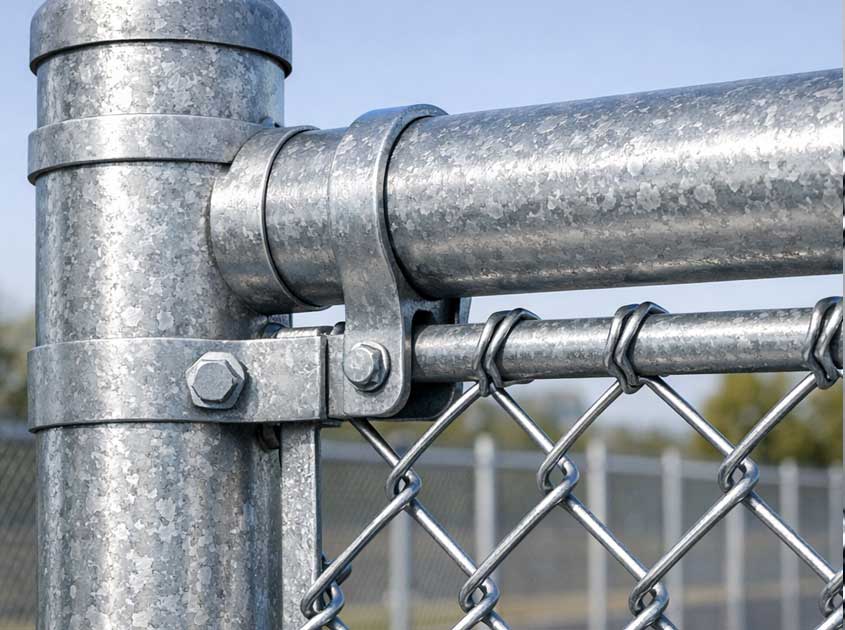
Deformation during loading and unloading
Corrosion caused by moisture and salt air
Surface damage during long sea voyages
Safety risks during handling
Well-designed export packing helps buyers:
Receive products in good condition
Reduce claims and disputes
Improve unloading efficiency
Meet local warehouse and project requirements
Roll Packing for Wire Mesh
Plastic Film or Waterproof Paper Wrapping
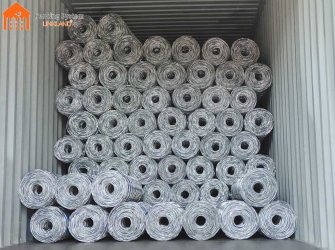
For wire mesh supplied in rolls, the most common packing method is:
Inner wrapping with waterproof paper or plastic film
Outer reinforcement with woven bags or shrink film
This method is widely used for welded wire mesh rolls, woven wire mesh, and galvanized mesh.
Advantages:
Cost-effective
Protects against moisture
Easy to handle and store
Roll Packing with Pallets
For higher-value or heavier rolls, pallets are often added.
Rolls are wrapped first
Then fixed onto wooden or steel pallets
Advantages:
Better protection during forklift handling

Reduced deformation
Faster loading and unloading
This method is popular for export to Europe, North America, and Australia.
Panel Packing for Wire Mesh
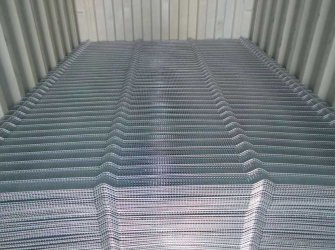
Bundle Packing with Steel Strips
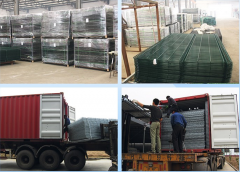
Wire mesh panels are commonly packed in bundles.
Panels are stacked evenly
Tied with steel strips
Wrapped with plastic film if needed
Advantages:
Simple and strong
Suitable for heavy panels
Efficient for container loading
This method is often used for welded mesh panels and fencing panels.
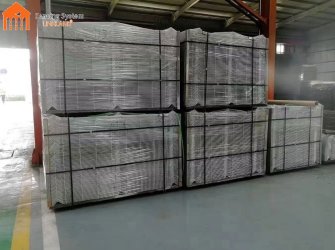
Palletized Panel Packing
For projects with strict handling or safety requirements, pallet packing is preferred.
Panels are stacked on pallets
Fixed with straps
Wrapped with stretch film
Advantages:
Enhanced protection
Reduced risk of edge damage
Suitable for warehouse storage
Fence and Special Product Packing
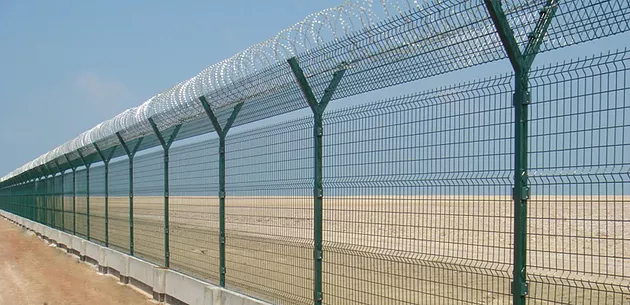
Fence Panels and Posts
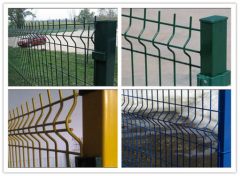
Fence systems usually include panels, posts, clamps, and accessories, which require organized packing.
Common methods include:
Panels bundled or palletized
Posts packed separately
Accessories packed in cartons
Clear labeling helps buyers identify each component quickly upon arrival.
Gabions and Heavy Mesh Products
Gabions and heavy wire mesh are usually packed as:
Folded flat bundles
Tied with steel wire
Optional pallet support
This method minimizes space usage and reduces shipping costs.
Crate and Wooden Case Packing
For high-value or precision wire mesh products, wooden crates or cases may be used.
Applications include:
Stainless steel wire mesh
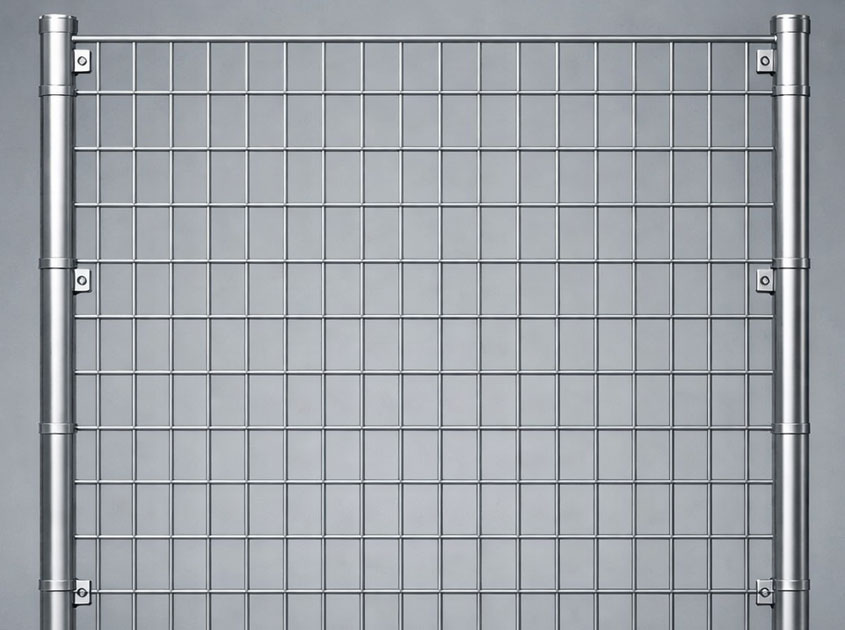
Filter mesh
Precision industrial mesh
Advantages:
Maximum protection
Suitable for long-distance sea transport
Reduced risk of deformation
Wooden packing typically complies with ISPM 15 standards for international shipping.
Anti-Corrosion Packing Measures
To prevent rust during sea transportation, especially for galvanized or black wire mesh, manufacturers may apply:
Anti-rust oil or vapor corrosion inhibitors (VCI)
Moisture-absorbing desiccants
Sealed waterproof wrapping
These measures are particularly important for shipments to humid or coastal regions.
Customized Packing for Different Markets
Export packing often needs to meet local market or customer requirements.
Customization may include:
Private labeling and branding
Barcodes and batch numbers
Language-specific markings
Special pallet sizes
Professional manufacturers work closely with buyers to meet these needs.
How Manufacturers Choose the Right Packing Method
Experienced Chinese wire mesh manufacturers select packing based on:
Product type and weight
Shipping method (FCL or LCL)
Destination country
Customer handling equipment
Cost-efficiency and safety balance
The goal is to provide adequate protection without unnecessary cost.
Common Packing Mistakes to Avoid
Buyers should be aware of common issues such as:
Insufficient moisture protection
Weak strapping for heavy bundles
Overpacking that increases shipping costs
Poor labeling that causes unloading confusion
Choosing an experienced export manufacturer helps avoid these risks.
Conclusion
Packing is a crucial part of wire mesh export that directly affects product quality, transportation safety, and customer satisfaction. From roll packing and panel bundles to palletized and crate packing, each method serves specific products and shipping conditions.
By working with a professional Chinese wire mesh manufacturer that understands international logistics and export standards, buyers can ensure their wire mesh products arrive safely, efficiently, and ready for use.
Pre:How to Ensure Wire Mesh Fence Quality When Buying from Overseas Suppliers?
Next:Best Wire Mesh Fence Solutions for Construction Projects in South America

 Address







.png)
.png)
.png)
.png)
