Home /
NEWS /
What Is 358 Security Fence and Why Is It Called 358?
Aug 26, 2026
358 security fence is a high-security welded wire fencing system designed to provide strong perimeter protection, anti-climbing performance, and good visibility.
It is widely used around locations where conventional fencing may not provide enough security, including industrial facilities, infrastructure sites, correctional facilities, airports, utilities, warehouses, and commercial properties.
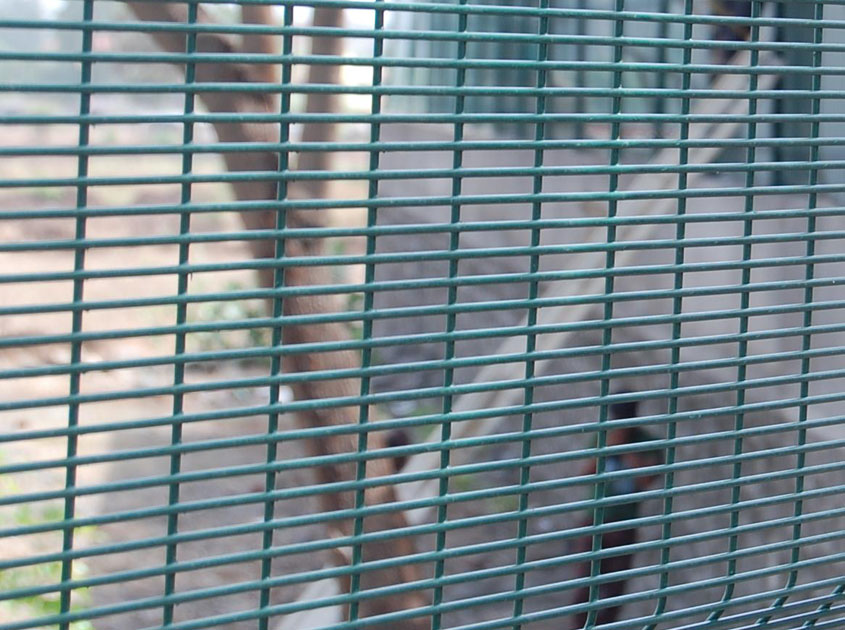 The name "358" comes from the dimensions of its mesh opening:
3 × 0.5 × 8 inches
This corresponds approximately to:
76.2 × 12.7 × 4.0 mm
The very narrow 12.7 mm opening is one of the defining characteristics of 358 security fence. It makes the fence difficult to climb and difficult to penetrate with conventional hand tools while still allowing relatively clear visibility through the panel.
This article explains what 358 fence is, why it is called 358, how it is manufactured, where it is used, and how it compares with other security fencing systems.
What Is 358 Security Fence?
358 security fence is a type of high-security welded wire mesh fence.
It is manufactured by welding horizontal and vertical steel wires together to create a dense rectangular mesh pattern.
The standard opening is approximately:
76.2 mm × 12.7 mm
The vertical and horizontal wires are typically around:
4.0 mm diameter
The resulting panel has a distinctive narrow-opening structure.
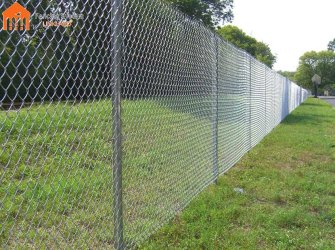
Unlike traditional chain link fencing, which has relatively large diamond-shaped openings, 358 fence has very small rectangular openings.
This gives it several security advantages.
Why Is It Called 358 Fence?
The name comes from the traditional imperial measurement of the mesh.
3 inches
The horizontal wire spacing is approximately:
3 inches = 76.2 mm
0.5 inch
The vertical wire spacing is approximately:
0.5 inch = 12.7 mm
8 gauge
The wire diameter is traditionally described as approximately:
8 gauge ≈ 4.0 mm
Therefore:
3 × 0.5 × 8 = 358
The name is essentially a shorthand way of describing the characteristic mesh configuration.
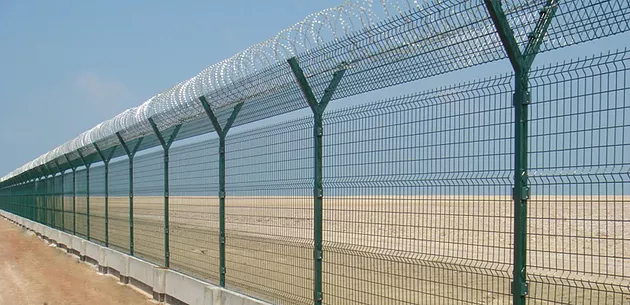
What Does 358 Fence Look Like?
The most recognizable feature is the dense rectangular mesh.
The openings are narrow enough that a person cannot easily place their fingers or toes into the mesh.
This makes the fence significantly more difficult to climb than conventional fencing.
How Is 358 Security Fence Made?
The manufacturing process generally includes several stages.
1. Wire Preparation
Steel wire is drawn to the required diameter, commonly around 4 mm for standard 358 fencing.
2. Wire Straightening and Cutting
The wires are prepared to the required panel dimensions.
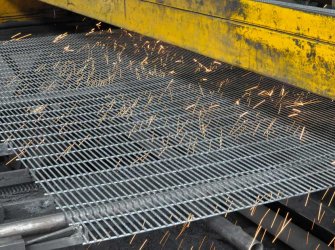
3. Automatic Welding
Horizontal and vertical wires are positioned at the specified spacing and welded together at every intersection.
This creates a rigid mesh panel.
4. Surface Treatment
The finished panels may receive:
Hot-dip galvanizing
Powder coating
PVC/polymer coating
Galvanizing followed by powder coating
The exact treatment depends on the required corrosion resistance and appearance.
5. Panel Finishing
The panels are cut, inspected, and prepared for installation.
Posts, clamps, bolts, and other accessories are normally supplied as part of the complete fencing system.
Why Is 358 Fence Considered High Security?
1. Very Small Mesh Openings
The approximately 12.7 mm narrow opening makes it difficult to insert:
Hands
Feet
Conventional cutting tools
This significantly reduces climbing and penetration opportunities.
2. Difficult to Climb
Traditional chain link fencing has diamond-shaped openings that can provide places for hands and feet.
358 fencing has much smaller openings.
As a result, it offers a relatively flat and difficult-to-grip surface.
This is one of the primary reasons it is known as an anti-climb fence.
3. Difficult to Cut
The small mesh and relatively thick steel wires make it more difficult to cut quickly using common manual tools.
However, no wire fence should be described as completely impossible to cut.
The security level depends on the entire system, including:
Mesh
Wire diameter
Posts
Fixings
Foundation
Gates
Security accessories
4. High Visibility
Despite its dense appearance, 358 fence provides relatively good visibility.
Security personnel can see through the fence, while cameras can monitor the surrounding area.
This makes it useful where both security and surveillance visibility are required.
5. Rigid Construction
Because the wires are welded at every intersection and the wire diameter is relatively large, the panels are rigid.
This reduces:
Sagging
Deformation
Movement
Maintenance requirements
Compared with flexible chain link mesh, 358 panels maintain their shape more effectively.
Where Is 358 Security Fence Used?
1. Industrial Facilities
358 fence is commonly used around:
Factories
Manufacturing plants
Industrial parks
Warehouses
Logistics facilities
It can provide a secure perimeter while maintaining visibility.
2. Airports
Airports require perimeter fencing that can provide:
High security
Anti-climb characteristics
Good visibility
Long-term outdoor performance
358 security fencing can therefore be considered for certain airport perimeter applications.
For airport projects, the exact fencing specification should follow the relevant airport security requirements.
3. Correctional Facilities
High-security fencing is particularly important around:
Prisons
Detention facilities
Secure institutions
358 mesh can be used as part of a broader security perimeter system.
Additional security measures may be incorporated depending on the site requirements.
4. Power and Utility Facilities
Security fencing is often required around critical infrastructure such as:
Substations
Power plants
Water treatment facilities
Utility installations
Telecommunications sites
358 fence can provide a strong physical boundary without completely blocking visibility.
5. Commercial Properties
It can also be used around:
Business parks
Data centers
Distribution centers
Storage facilities
Commercial warehouses
The combination of security and professional appearance makes it suitable for many commercial environments.
6. Railway and Transportation Infrastructure
358 fencing may be used around:
Railway facilities
Transportation depots
Bridges
Infrastructure compounds
The narrow openings can help prevent unauthorized access.
7. High-Security Government Facilities
Some government and infrastructure facilities require stronger perimeter protection than standard chain link fencing can provide.
358 fence can form part of a layered perimeter security system.
What Are the Typical Specifications of 358 Fence?
A standard 358 panel commonly has:
Specification Typical Value
Mesh opening 76.2 × 12.7 mm
Wire diameter Approx. 4.0 mm
Panel width Approx. 2.0–2.5 m
Panel height Commonly 1.8–3.6 m
Surface treatment Galvanized / powder coated
Color Commonly green or black
Structure Welded wire mesh
Exact dimensions vary according to manufacturer and project requirements.
What Colors Are Available?
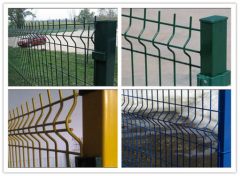
358 security fencing is commonly supplied in colors such as:
Green
Black
Grey
White
Green and black are particularly common for industrial and infrastructure projects.
Powder coating can also provide additional corrosion protection and allow the fence to blend into the surrounding environment.
What Are the Main Components of a 358 Security Fence?
A complete system normally includes more than the mesh panel.
1. 358 Mesh Panels
The main security barrier.
2. Fence Posts
Posts support the panels and transfer loads into the foundation.
Common post shapes include:
Square posts
Rectangular posts
Specialized security posts
3. Fixing Clamps
Special security clamps attach the mesh panels to the posts.
Depending on the system, security bolts may be used to make unauthorized removal more difficult.
4. Security Bolts
Security fixings can reduce the possibility of standard tools being used to remove the fence.
5. Gates
Pedestrian or vehicle gates can be integrated into the perimeter.
Gate specifications should generally match the security level of the fence.
358 Fence vs Chain Link Fence
This is one of the most common comparisons.
Feature 358 Security Fence Chain Link Fence
Mesh shape Rectangular Diamond
Opening Very small Usually larger
Anti-climb Excellent Moderate
Cutting resistance High Lower
Rigidity High Flexible
Visibility Good Excellent
Installation Panel system Roll system
Cost Higher Lower
Security level High Low–medium
Typical use High-security sites General perimeter fencing
A simple rule is:
Chain link fence is often preferred when cost and large-area coverage are the priorities.
358 fence is preferred when perimeter security and anti-climb performance are more important.
358 Fence vs Welded Wire Fence
358 fence is itself a type of welded wire fence, but it is designed specifically for higher-security applications.
Feature Standard Welded Wire Fence 358 Security Fence
Mesh opening Various Very narrow
Wire diameter Various Usually heavier
Rigidity Good Very high
Anti-climb Depends on design Excellent
Security General–high High
Cost Lower Higher
Applications Agriculture, commercial Infrastructure, industrial, security
What Is the Difference Between 358 and 3510 Fence?
The names can sometimes cause confusion.
358 traditionally refers to:
3" × 0.5" × 8 gauge
A 3510 configuration generally refers to approximately:
3" × 0.5" × 10 gauge
The difference is primarily the wire diameter.
Because gauge systems can vary by market and manufacturer, professional buyers should specify the actual wire diameter in millimeters rather than relying only on the gauge number.
Is 358 Fence Really Anti-Climb?
Yes, it is specifically designed to make climbing difficult.
The narrow mesh opening gives a person very little room to place their hands or feet.
However, "anti-climb" does not mean physically impossible to climb under every circumstance.
Fence height, nearby objects, gates, terrain, and additional security measures all influence actual security performance.
Is 358 Fence Difficult to Cut?
The relatively thick wire and dense mesh make rapid manual cutting more difficult than with many conventional wire fences.
However, no ordinary welded wire fence should be described as completely cut-proof.
For high-security projects, the fence should be combined with:
Appropriate posts
Security fixings
Secure gates
Proper foundations
Detection or surveillance systems where required
How to Choose the Right 358 Security Fence?
1. Determine the Security Level
Ask:
Is basic perimeter control sufficient?
Is anti-climb performance required?
Is anti-intrusion protection required?
Is the site considered critical infrastructure?
The answer determines whether standard welded mesh, 358 fence, or a more specialized security system is appropriate.
2. Select Fence Height
Common heights may include:
1.8 m
2.0 m
2.4 m
3.0 m
3.6 m
Higher fences can provide greater deterrence, but structural requirements and local regulations must also be considered.
3. Select the Surface Treatment
For outdoor installations, common options include:
Galvanized
Good corrosion protection.
Powder Coated
Provides both corrosion protection and appearance.
Galvanized + Powder Coated
Often selected for demanding outdoor environments where longer-term corrosion protection is important.
4. Select the Correct Post System
The posts need to be strong enough for:
Panel weight
Wind loading
Fence height
Site conditions
A high-security mesh panel cannot compensate for an inadequate supporting structure.
5. Consider the Foundation
The foundation should be designed according to:
Soil conditions
Fence height
Wind load
Post dimensions
Local construction requirements
For large security projects, professional structural assessment may be necessary.
Common Mistakes When Buying 358 Fence
Mistake 1: Looking Only at the Mesh Opening
A supplier may quote the correct 358 opening but use a different wire diameter.
Always confirm:
Mesh opening + wire diameter
Mistake 2: Ignoring the Post System
The fence is a complete system.
Check:
Post size
Post thickness
Post spacing
Fixing method
Foundation
Mistake 3: Comparing Prices Without Comparing Coatings
A galvanized panel and a galvanized + powder-coated panel should not automatically be treated as equivalent.
Mistake 4: Assuming 358 Means Completely Secure
358 fence significantly improves perimeter security, but security is always a system rather than a single product.
358 Security Fence Selection Guide
Project Suitability Main Reason
Factory Excellent Strong perimeter security
Warehouse Excellent Anti-climb + visibility
Data center Excellent High-security perimeter
Power substation Excellent Critical infrastructure protection
Airport Excellent Security + visibility
Prison Excellent Anti-climb performance
Commercial property Good Strong security
Farm Usually unnecessary Standard agricultural fencing may be more economical
Garden Not economical Light fencing is usually sufficient
Residential yard Usually excessive Standard fencing is generally sufficient
Why Choose linkland fence 358 Security Fence?
linkland fence supplies 358 high-security welded wire fence for international contractors, security fencing companies, infrastructure projects, distributors, and industrial customers.
Available options include:
Standard 358 security fence
Galvanized 358 mesh panels
Powder-coated 358 fence
Galvanized + powder-coated fence
Matching security posts
Fixing clamps
Security bolts
Pedestrian gates
Vehicle gates
The system can be customized according to:
Mesh opening
Wire diameter
Panel height
Panel width
Post dimensions
Surface treatment
Color
Packaging
For project quotations, customers can provide the fence height, total perimeter length, required mesh specification, coating, gate requirements, and destination so that the complete fencing system can be calculated.
Frequently Asked Questions
Why is it called 358 fence?
The name comes from the traditional dimensions of the mesh: approximately 3 inches × 0.5 inch × 8 gauge, corresponding roughly to 76.2 × 12.7 mm mesh opening with approximately 4 mm wire.
Is 358 fence the same as anti-climb fence?
358 fence is commonly called anti-climb fence because its narrow mesh openings make it difficult to climb.
Is 358 fence stronger than chain link fence?
For many security applications, 358 fencing provides greater rigidity and resistance to climbing and manual penetration than conventional chain link fencing. However, actual performance depends on the complete fence system.
Is 358 fence suitable for airports?
It can be suitable for airport perimeter applications, but airport projects may have specific security standards and specifications that must be followed.
What wire diameter is used for 358 fence?
A standard 358 fence commonly uses approximately 4.0 mm wire, although other specifications can be manufactured according to project requirements.
Can 358 fence be customized?
Yes. Panel dimensions, wire diameter, surface treatment, color, posts, gates, and fixing systems can be customized according to project requirements.
Conclusion
358 security fence is a high-security welded wire fencing system designed for strong perimeter protection, anti-climb performance, rigidity, and visibility.
The name "358" comes from its traditional specification:
3" × 0.5" × 8 gauge
or approximately:
76.2 × 12.7 mm mesh opening + 4.0 mm wire
Its narrow openings make it difficult to climb and more resistant to conventional manual cutting than many standard fencing systems.
It is particularly suitable for:
Airports
Industrial facilities
Data centers
Power facilities
Warehouses
Transportation infrastructure
Correctional facilities
Other high-security sites
When selecting 358 fencing, do not evaluate the mesh panel alone. Consider the complete system:
Mesh + Wire Diameter + Coating + Posts + Fixings + Gates + Foundation
This system-based approach is essential for achieving the required level of perimeter security while keeping the overall project cost under control.
Pre:What Is Welded Wire Fence and Where Is It Used?
Next:Chain Link Fence vs Welded Wire Fence: Which One Is Better?

 Address





.png)
.png)
.png)
.png)
