Home /
NEWS /
Galvanized Welded Wire Fence vs. PVC Coated Welded Fence: Which Is Better?
Oct 20, 2026
When comparing galvanized welded wire fence and PVC coated welded fence, buyers often focus on appearance and price. However, the most important differences are found in the coating system, corrosion protection, maintenance requirements, and suitability for the installation environment.
Both types use welded steel wires to form a regular mesh grid. The main difference is how the steel is protected and finished. Galvanized welded wire fence uses a zinc coating to help protect the steel against corrosion, while PVC coated welded fence adds a polymer layer over the underlying wire or metal coating.
Neither option is automatically better for every project. A farm boundary, warehouse enclosure, residential perimeter, and coastal installation may have different requirements.
This guide explains how the two fencing options compare, what buyers should check before ordering, and how to choose a product that fits the project's actual conditions.
 1. What Is Galvanized Welded Wire Fence?
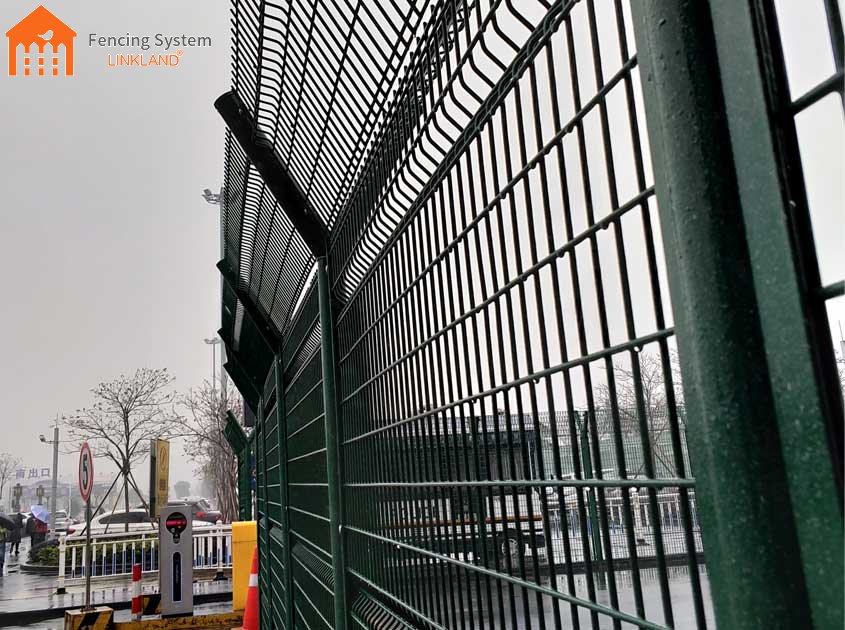
Galvanized welded wire fence is manufactured by welding horizontal and vertical steel wires into a mesh grid and protecting the steel with a zinc coating. The exact production sequence depends on the product.
Two common approaches are:
Galvanized before welding: The steel wire is galvanized first and then welded into mesh. The welding process can affect the zinc coating around the welded intersections, so the finished product should be assessed for coating continuity and corrosion protection.
Galvanized after welding: The mesh is welded from ungalvanized wire and then galvanized. This process can coat the finished structure, including the welded intersections, depending on the process and specification.
These products should not be assumed to have identical coating characteristics. Buyers should confirm the manufacturing method and the applicable coating requirements rather than relying on the word "galvanized" alone.
Main characteristics
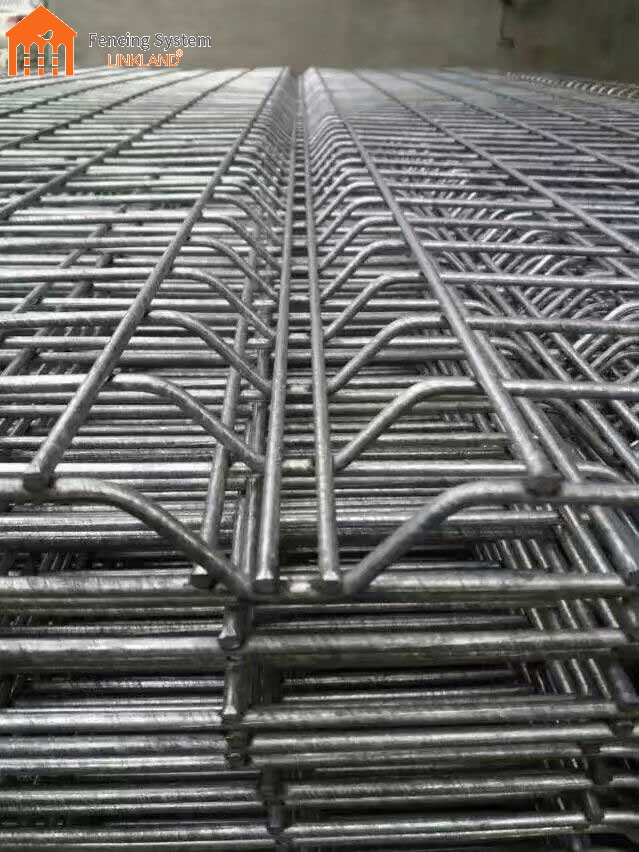
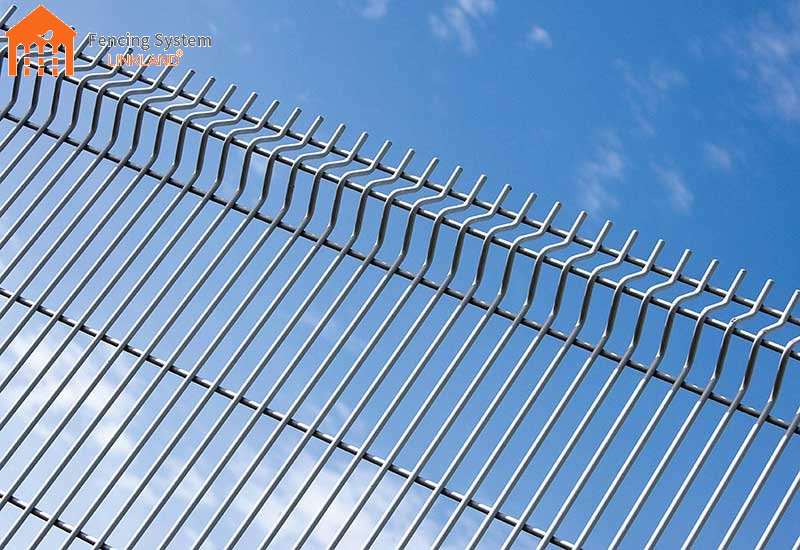
Metallic silver or gray appearance.
Zinc coating provides a protective barrier and sacrificial protection to the steel.
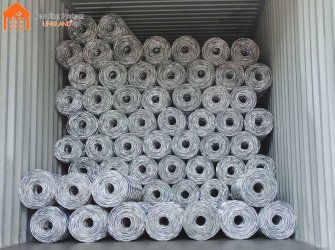
Available in different mesh openings, wire diameters, panel sizes, and roll formats.
Suitable for many outdoor and indoor applications when the coating specification matches the environment.
Often selected for functional fencing where a natural metallic finish is acceptable.
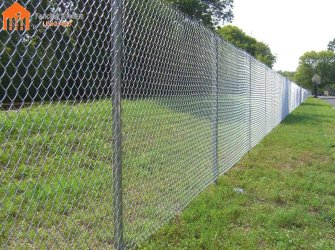
Galvanized welded wire fence is commonly used for agricultural enclosures, industrial boundaries, warehouse areas, gardens, equipment protection, and general-purpose perimeter fencing.
2. What Is PVC Coated Welded Wire Fence?
PVC coated welded wire fence uses steel wire that has an additional polymer coating. Depending on the manufacturing process, the underlying wire may be galvanized or protected by another specified treatment before the PVC coating is applied.
This distinction matters. PVC coated fencing is not one uniform product category: the quality and construction of the underlying steel and coating system can vary between suppliers.
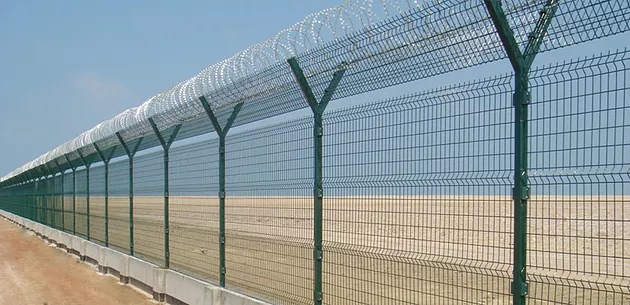
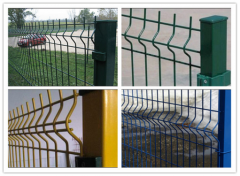
The polymer layer provides a colored finish and can add a further barrier between the steel and the surrounding environment. Common colors include green and black, although other colors may be available depending on the manufacturer.
Main characteristics
Colored finish for landscaping, residential, commercial, and agricultural settings.
Additional polymer layer over the underlying wire or metal coating.
Available in different mesh openings, wire diameters, and panel or roll formats.
Can help reduce direct exposure of the underlying metal to moisture where the coating remains intact.
Requires attention to coating adhesion, thickness, uniformity, and damage during transport or installation.
PVC coated welded wire fence is often chosen where appearance is important, such as gardens, parks, residential boundaries, animal enclosures, and selected commercial properties.
However, a PVC layer does not make a fence maintenance-free or guarantee a particular service life. The underlying steel protection, coating quality, climate, installation, and physical damage all affect performance.
3. Galvanized vs. PVC Coated Welded Wire Fence: Key Differences
The comparison below assumes both products are manufactured to appropriate specifications for their intended applications. Actual performance depends on the specific products being compared.
Comparison factor
Galvanized welded wire fence
PVC coated welded wire fence
Surface appearance
Metallic silver or gray
Colored polymer finish, commonly green or black
Main protective system
Zinc coating
Polymer coating, sometimes combined with underlying galvanizing
Corrosion protection
Depends on zinc coating and exposure
Depends on polymer integrity and underlying metal protection
Surface damage
Zinc coating may be locally damaged
Polymer may be cut, scratched, or detached
Visual integration
Suits functional and industrial settings
Often preferred for landscaping and visually sensitive areas
Product specifications
Mesh, wire diameter, zinc coating, dimensions
Mesh, core wire diameter, finished diameter, polymer coating, underlying protection
Maintenance
Inspection and repair as needed
Inspection for coating damage and repair as appropriate
Price
Depends on wire and zinc coating specifications
Depends on core wire, underlying protection, polymer coating, and processing
Typical applications
Agriculture, warehouses, industrial boundaries, general outdoor fencing
Gardens, parks, residential boundaries, selected agricultural and commercial applications
The key lesson is that "galvanized" and "PVC coated" describe different aspects of the product. One identifies a zinc-based protective coating; the other identifies a polymer finish. Some PVC coated fences are also galvanized underneath.
4. Corrosion Protection: Which Fence Performs Better Outdoors?
Outdoor corrosion resistance depends on the complete coating system and the environment in which the fence is installed.
How galvanized coating protects steel
Zinc helps protect steel in two ways. First, it creates a barrier that limits contact between the steel and the surrounding environment. Second, zinc can provide sacrificial protection to exposed steel in certain conditions.
The amount and condition of the zinc coating matter. A heavier, properly applied zinc coating may provide greater corrosion protection than a lighter coating under comparable conditions, but performance cannot be predicted from the word "galvanized" alone.
Buyers should confirm the coating specification, inspection method, and whether the mesh was galvanized before or after welding.
How PVC coating protects steel
A polymer coating can act as a physical barrier that reduces direct contact between the underlying metal and moisture or other corrosive agents.
Its effectiveness depends on the coating remaining sufficiently intact. Deep cuts, peeling, poor adhesion, processing defects, and installation damage can expose the underlying metal.
The protection beneath the PVC layer is therefore important. A well-made PVC coated fence with an appropriately protected steel core may offer a useful combination of metal and polymer protection. A product with inadequate underlying protection should not be assumed to perform equally well simply because it looks similar.
What about coastal or industrial environments?
Coastal air, salt deposits, industrial pollutants, persistent moisture, and certain agricultural chemicals can increase corrosion challenges.
For these environments, do not select a fence solely by color or coating name. Ask the supplier to specify the underlying steel protection and coating requirements, and check whether the product is suitable for the expected exposure.
For particularly aggressive environments, the project designer may need to consider a more corrosion-resistant material or a more demanding coating system.
Practical takeaway: The better choice is the product whose complete coating system is specified and verified for the actual exposure conditions—not necessarily the one with the most visible coating layers.
 5. Appearance: Metallic Finish or Colored Fence?
Appearance may seem secondary, but it can be important in projects where the fence is visible to customers, residents, visitors, or the public.
When galvanized fencing makes sense
Galvanized welded wire fence has a practical metallic appearance that often suits:
Industrial facilities and warehouses.
Agricultural properties and livestock enclosures.
Utility and equipment areas.
Functional boundaries where color coordination is not a priority.
Projects that require a specified zinc-coated steel finish.
The surface appearance may change over time as the fence is exposed to weather. The visual condition depends on the coating, environment, and maintenance.
When PVC coated fencing makes sense
PVC coated welded wire fence can blend more easily with landscaping or architectural surroundings. Green fencing is often selected for gardens and planted boundaries, while black fencing may be preferred where a less visually prominent grid is desired.
Potential applications include:
Residential gardens and property boundaries.
Parks and recreational areas.
Commercial landscaping.
Decorative enclosures and selected animal housing.
Sites where the fence color must match a project design.
Color availability, gloss level, and surface texture can vary. For large projects, buyers should confirm the exact color and request a sample where visual consistency is important.
6. Price Comparison: Why PVC Coated Fence May Cost More
PVC coated welded wire fence often involves additional coating materials and processing, but the final price depends on the actual product specification. It is not possible to determine which option is cheaper from the coating name alone.
Several factors influence the quotation.
Wire diameter and steel consumption
Thicker wire generally uses more steel per unit length, all else being equal. However, mesh opening, panel dimensions, wire spacing, and steel specifications also affect material consumption.
For PVC coated wire, buyers must distinguish between the core wire diameter and the finished diameter after coating.
For example, a supplier might specify a core wire diameter of 2.0 mm and a finished diameter of approximately 2.5 mm. These figures are illustrative only; the actual dimensions depend on the product. The 2.5 mm finished diameter should not be interpreted as 2.5 mm of steel.
Comparing a galvanized fence with 2.5 mm bare steel wire against a PVC coated fence with a 2.0 mm steel core and a 2.5 mm finished diameter would not be an equivalent comparison.
Coating requirements
The price of galvanized fencing can vary according to the zinc coating specification and manufacturing process. PVC coated fencing also varies according to the polymer coating, application process, color, adhesion requirements, and underlying metal protection.
Two products that look similar may therefore contain different amounts of steel or have different protective systems.
Panel or roll format
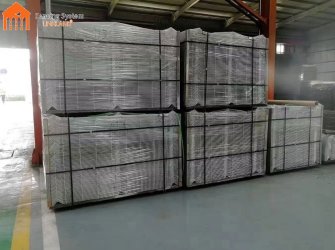
Rigid panels and flexible mesh rolls may have different manufacturing, packaging, handling, and installation costs. The best format depends on the fence layout and supporting structure.
Freight and installation
For imported fencing, shipping volume, bundle dimensions, loading efficiency, destination, and delivery terms can influence the landed cost.
A fair quotation comparison should use the same fence height, mesh opening, core wire diameter, finish requirements, quantity, accessory scope, and delivery terms.
7. Installation and Maintenance Considerations
Both fence types require correct installation. A suitable coating cannot compensate for poor post foundations, damaged mesh, unsuitable fixings, or installation conditions that place excessive stress on the fence.
Installing galvanized welded wire fence
Before installation, inspect the mesh for damage to the zinc coating, especially around welds, edges, and areas affected by handling. Use compatible fixings and follow the specified installation method.
If cutting or drilling is required, any exposed areas should be assessed and treated according to the product specification and applicable repair guidance.
Installing PVC coated welded wire fence
Take care when transporting, cutting, tensioning, and fastening PVC coated mesh. Sharp tools, rough handling, and over-tightened fittings can damage the polymer layer.
Use compatible clamps or ties where possible, and inspect cut ends and damaged areas. The appropriate repair method depends on the underlying metal protection and the coating manufacturer's recommendations.
Routine inspection
For either product, periodic inspection should check for:
Bent or broken wires.
Damaged coating or exposed steel.
Loose fixings and unstable posts.
Ground contact, standing water, or persistent vegetation trapping moisture.
Impact damage caused by vehicles, equipment, or livestock.
Gate and corner areas experiencing repeated stress.
Inspection frequency should reflect the site conditions and the consequences of fence failure.
8. Which Fence Is Better for Different Applications?
The best option depends on the project's functional and environmental requirements.
Application
Option to consider
Why
Industrial warehouse boundary
Galvanized welded wire fence
Functional metallic finish and a defined zinc coating specification
Agricultural field enclosure
Galvanized or PVC coated welded wire fence
Choose according to livestock, exposure, and budget
Garden boundary
PVC coated welded wire fence
Colored finish can blend with landscaping
Public park
PVC coated or galvanized fence
Depends on appearance, maintenance, and site specification
Equipment enclosure
Galvanized welded wire fence
Practical finish for functional enclosures
Residential property boundary
PVC coated welded wire fence
Useful where color and visual integration matter
Humid or frequently wet location
Either, with suitable coating specifications
Actual corrosion performance depends on the complete coating system
Coastal or chemically aggressive location
Project-specific corrosion-resistant system
Requires assessment of exposure and verified coating suitability
These are starting points rather than universal rules. A galvanized product with a suitable coating specification may outperform a poorly manufactured PVC coated product in some environments. Conversely, a well-made PVC coated product with sound underlying protection may be a good fit where appearance and additional surface protection are both important.
9. How to Choose the Right Product for Your Project
Before requesting quotations, define the requirements that affect performance and cost.
Step 1: Identify the purpose
Is the fence intended for livestock containment, property boundaries, equipment protection, landscaping, or another use? The answer influences mesh opening, height, rigidity, and installation design.
Step 2: Specify mesh opening and wire diameter
State the horizontal and vertical mesh dimensions and the required wire diameter. For PVC coated fencing, ask for both the core wire diameter and finished diameter.
Step 3: Confirm the coating structure
For galvanized fencing, identify the required zinc coating and whether galvanizing occurs before or after welding.
For PVC coated fencing, confirm whether the core wire is galvanized and what coating characteristics are specified. Do not assume that every PVC coated product has the same underlying protection.
Step 4: Match the finish to the environment
Consider rainfall, humidity, salt exposure, agricultural chemicals, direct physical contact, and maintenance access.
Step 5: Confirm the complete fence system
Clarify whether the quotation includes mesh panels or rolls only, or whether it also covers posts, brackets, clamps, ties, gates, and other fittings.
Step 6: Compare the delivered cost
Compare equivalent quantities and specifications, including packing, freight, delivery terms, and any accessories needed for installation.
A clear specification reduces the risk of selecting a cheaper product that does not meet the project's actual requirements.
10. What to Ask a Manufacturer Before Ordering
For distributors, contractors, importers, and project buyers, a detailed inquiry helps the manufacturer quote accurately.
Use the following checklist:
Product type: galvanized welded wire fence or PVC coated welded wire fence.
Mesh opening: horizontal × vertical dimensions.
Core wire diameter and finished diameter, where applicable.
Panel or roll dimensions.
Galvanizing method and zinc coating requirements.
PVC coating color and applicable coating requirements.
Required fence height and total quantity.
Post, clamp, bracket, gate, and accessory requirements.
Intended application and installation environment.
Packing method and destination port.
Required inspection documents or quality requirements.
Target delivery schedule and preferred trade terms.
If the project has a drawing or bill of quantities, send it with the inquiry. This helps suppliers confirm panel dimensions, post spacing assumptions, gate quantities, and the full material scope.
11. Work With an Experienced Wire Mesh Manufacturer
For international B2B buyers, choosing a manufacturer involves more than comparing a unit price. The supplier should be able to explain the product construction, coating process, dimensions, tolerances, and the difference between nominal specifications and finished measurements.
Qunkun Metal, based in Anping, Hebei, China, has more than 30 years of wire mesh manufacturing and export experience. Its product range includes welded wire mesh, galvanized wire mesh, and fencing products for agricultural, commercial, and industrial applications.
When evaluating a supplier, ask for clear specifications, coating details, available dimensions, compatible accessories, packaging information, and inspection documentation where required.
The goal is to select a product that meets the project's requirements and can be quoted, manufactured, inspected, and shipped with a clear understanding of the specification.
Frequently Asked Questions
Is galvanized welded wire fence better than PVC coated welded wire fence?
Neither is universally better. Galvanized fencing may suit functional applications where a metallic finish is acceptable. PVC coated fencing may be preferred for colored finishes and additional surface protection. The underlying steel protection, coating quality, and installation environment determine the practical choice.
Does PVC coated welded wire fence have galvanized steel underneath?
Some products do, but not all. Buyers should confirm the core wire material and underlying coating directly with the manufacturer rather than assuming that PVC coating always includes galvanizing.
Does PVC coating prevent rust completely?
No. PVC coating can help limit direct exposure to the underlying metal, but cuts, peeling, poor adhesion, and installation damage may expose the steel. The underlying metal protection and the environment also influence corrosion behavior.
Is PVC coated welded wire fence more expensive?
It may cost more because of additional coating materials and processing, but pricing depends on the steel core, mesh dimensions, coating requirements, order quantity, and shipping. Compare products with equivalent specifications.
What is the difference between core wire diameter and finished wire diameter?
Core wire diameter measures the steel wire before the polymer coating. Finished diameter measures the coated wire. For PVC coated fencing, both values are important because the polymer layer contributes to the overall diameter but is not steel.
Can galvanized welded wire fence be used in coastal areas?
It may be suitable if the zinc coating and product construction meet the project's exposure requirements. Coastal conditions can accelerate corrosion, so the required coating should be assessed carefully. Severe exposure may call for a more specialized corrosion-protection system.
Which color is best for PVC coated welded wire fence?
Green and black are common choices. The best color depends on the surrounding landscape, architectural design, visibility requirements, and project specifications. For large orders, confirm the exact color with a sample or approved specification.
Conclusion
Galvanized welded wire fence and PVC coated welded wire fence can both be effective solutions when selected and manufactured for the intended application.
Galvanized fencing offers a metallic finish and zinc-based corrosion protection. PVC coated fencing provides a colored polymer surface and may add another protective layer, particularly when the underlying steel is appropriately protected.
The most important purchasing decision is not simply choosing between silver and green fencing. It is confirming the steel core, mesh dimensions, wire diameter, coating structure, installation environment, and total project scope.
For an accurate comparison, request quotations using equivalent specifications and confirm whether the quoted wire diameter refers to bare steel or the finished coated wire. This gives you a much clearer basis for evaluating quality, price, and suitability before placing an order.
Pre:High Tensile Farm Fence vs. Traditional Farm Fence: Which Is Right for Your Farm?
Next:none

.png)
.png)
.png)
.png)


 Address